Introduction
The summer of 1852 brought more than heat to the prairies of North Texas—it carried a slow-burning tension that was about to ignite. The land, vast and untamed, had lured settlers westward with promises of fertile fields and secure homes. But beneath those promises lay a knot of red tape, delayed surveys, and corporate control that strangled the dreams of many. In the middle of this struggle stood Henry Oliver Hedgcoxe, the unyielding resident agent of the Texas Emigration & Land Company (TELC). To some, he was simply doing his job; to others, he was the living embodiment of distant investors who cared more for contracts and claims than for the sweat-soaked labor of frontier families. What followed would be remembered not as a mere paperwork dispute, but as a flashpoint where ordinary settlers confronted authority head-on, forcing the state to reckon with their demands for fairness and their right to the land they had fought to make their own.
The Roots of Discontent
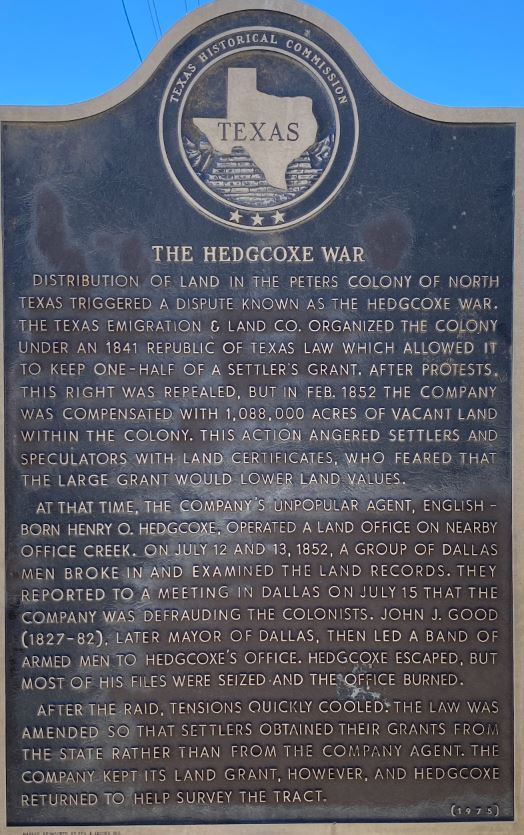
The Peters Colony was established under an 1841 empresario contract with William S. Peters and Associates. In the empresario system, the Republic of Texas granted individuals or groups the right to bring settlers to a defined area in exchange for land. Empresarios acted as recruitment agents, shouldering the risk and cost of attracting families to remote frontiers. The government’s goal was to secure sparsely populated regions, deter Native raids, and strengthen claims against foreign powers by filling the land with loyal settlers.
Under the Peters contract, each family that came to the colony could receive 640 acres, and each single man 320 acres, provided they improved and lived on the land. The incentive for empresarios and investors was the land they received for themselves as payment for fulfilling settlement quotas. By the mid-1840s, financial and administrative control of the colony shifted to the Texas Emigration & Land Company, headquartered outside Texas. This change was due to the need for greater capital, the original partners’ financial difficulties, and the involvement of new investors.
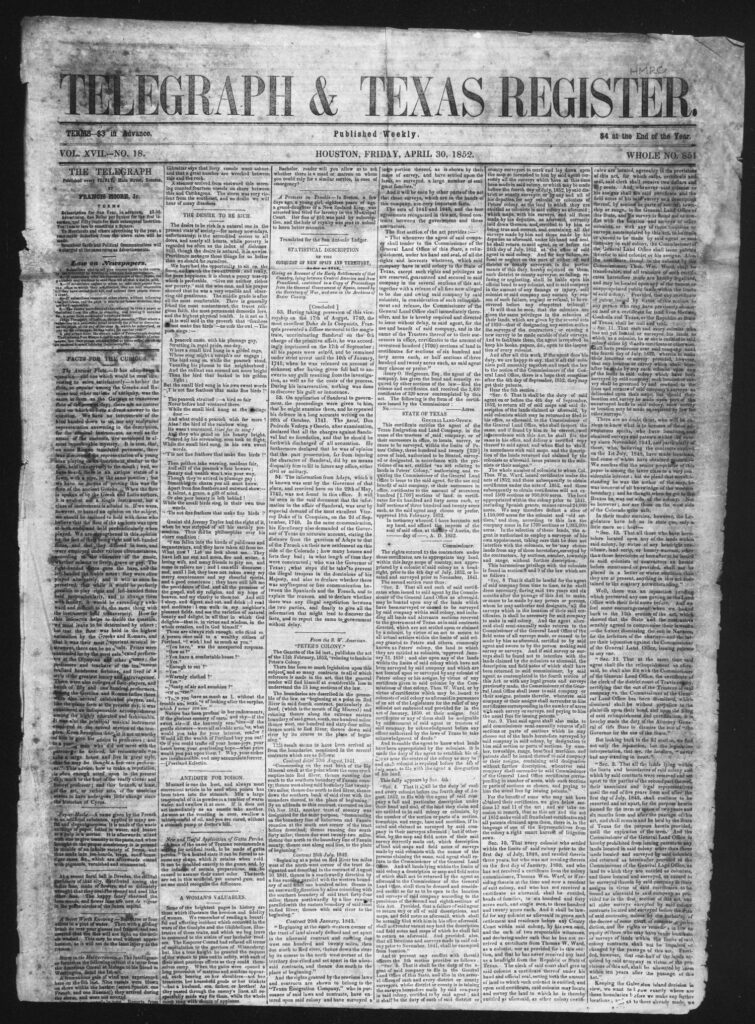
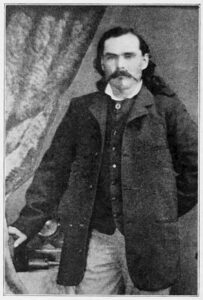
Henry Oliver Hedgcoxe, an Englishman born in London, immigrated to the United States in 1819 before eventually making his way to Texas. By the 1840s, he was working as the TELC’s resident agent in North Texas. His responsibilities included verifying settlers’ claims, overseeing surveys, and ensuring company policies were followed. His office near Stewart Creek became the central checkpoint for settlers’ dreams—and frustrations.
Persistent delays in surveying, complicated claim requirements, and fears of land speculation bred resentment. Meetings in Collin, Denton, and Dallas counties turned into hotbeds of anti-company sentiment. Legislative attempts in 1850 to ease tensions proved ineffective.
The Compromise Law of 1852
By early 1852, the dispute between the settlers and TELC had reached a critical stage. Thousands of families—spread across what would become multiple North Texas counties—were still without clear legal title to the land they had worked and improved. Many feared that if they missed filing deadlines or failed to meet documentation requirements, the company could claim their land and resell it to new buyers. Lawmakers recognized that unresolved land titles were stalling settlement, discouraging investment, and fostering instability on the frontier.
The Texas Legislature passed the Compromise Law in February 1852 to break the deadlock. It extended filing deadlines, clarified certain requirements, and awarded over a million acres elsewhere to the TELC as compensation for relinquishing some claims in the Peters Colony. The intention was to protect settlers who had legitimately fulfilled settlement requirements while providing the company with land value in return for reduced control over prime tracts.
However, when Hedgcoxe issued a circular in May 1852 announcing an August 4 filing deadline—with all claims to be processed through his office—many interpreted it as a final attempt to tighten control. Suspicion ran high that the process could be used to disqualify claims on technicalities, effectively taking land from settlers who had already built homes and farms. Even if not intended as a land grab, the short timeline and the requirement to deal directly with the unpopular agent deepened distrust and set the stage for confrontation.
The Boiling Point
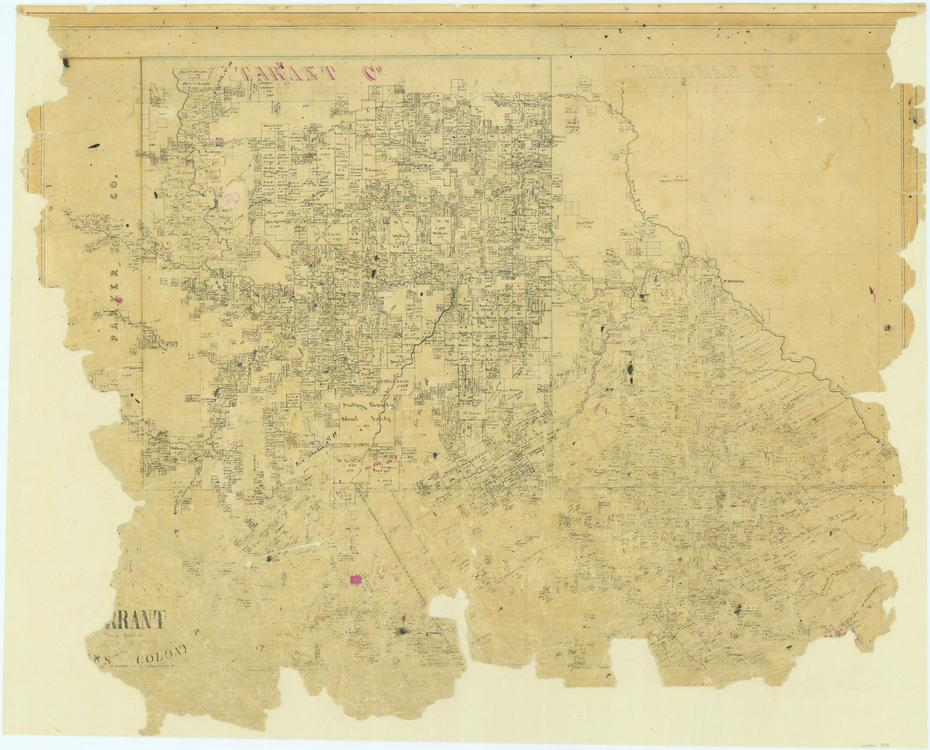
By mid-July, tensions reached a peak. On July 12–13, a settlers’ committee—formed by local leaders to investigate the TELC’s record-keeping—visited Hedgcoxe’s office at Stewart Creek to review claim files. These committees often arose from mass meetings and were made up of respected landholders, though the surviving historical record names few individuals from this specific group. Their purpose was to ensure transparency, prevent the removal or destruction of records, and report findings to the wider settler community.
At a mass meeting in Dallas on July 15, Hedgcoxe was accused of corruption. The next day, John Jay Good, a Tennessee-born lawyer who had settled in Dallas and was active in local politics and the militia, led about a hundred armed men to Stewart Creek. Good was known for his organizational skills, commanding presence, and later civic leadership, eventually serving as mayor of Dallas and a judge.
Stewart Creek, the site of the TELC office, lies in present-day The Colony, Texas, near the eastern shore of Lewisville Lake. At the time, there was no formal town at the site—only scattered settlements and homesteads tied to the Peters Colony land grants.
The Confrontation at Stewart Creek
On July 16, 1852, the militia arrived at Hedgcoxe’s office. According to most accounts, they seized the TELC records and transported them to the Dallas County Courthouse for safekeeping. Some accounts say the office was set ablaze. Local tradition adds a colorful twist: as the armed party approached, Hedgcoxe slipped into a nearby cornfield to hide before escaping the area entirely. While not consistently documented in contemporary sources, the tale has persisted in local memory.
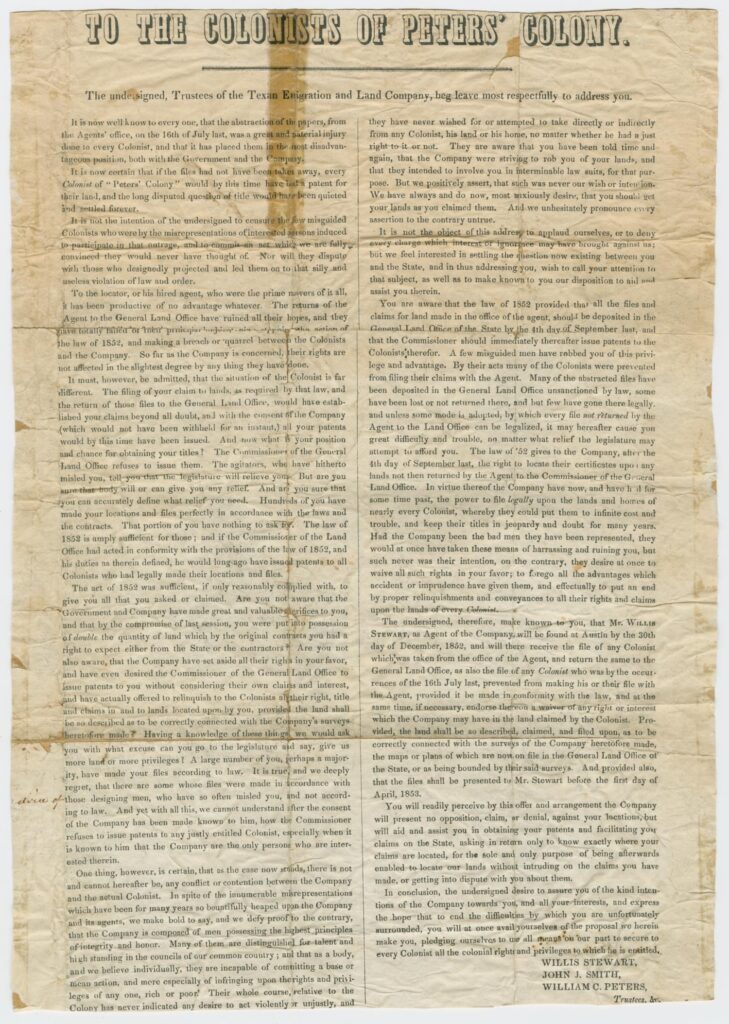
Banished from the colony, Hedgcoxe departed for Austin. Historical accounts suggest that after leaving North Texas, he did not return to his former position. His later life remains less documented, though some sources indicate he continued working in administrative or clerical roles in Texas until fading from public view.
The TELC quickly shifted to a conciliatory tone. By February 7, 1853, the Legislature amended the Compromise Law, creating terms acceptable to both settlers and the company. Over the next decade, courts and legislators resolved lingering disputes, and thousands of settlers finally secured clear title to their land.
Legacy
The Hedgcoxe War was more than a one-day clash on the Texas frontier—it was a defining moment in the shaping of land policy, community solidarity, and the limits of corporate authority. It revealed how ordinary people, when faced with the possible loss of their homes and futures, could unite across counties and act decisively to defend their rights. Its echoes reach into the present: modern debates over eminent domain, property rights, and corporate influence on public resources are built on the same questions of fairness and access that fueled the standoff in 1852. The story of the Hedgcoxe War reminds us that the balance between public interest and private enterprise is never settled—it is continually tested, and it is the vigilance of engaged citizens that keeps it in check.